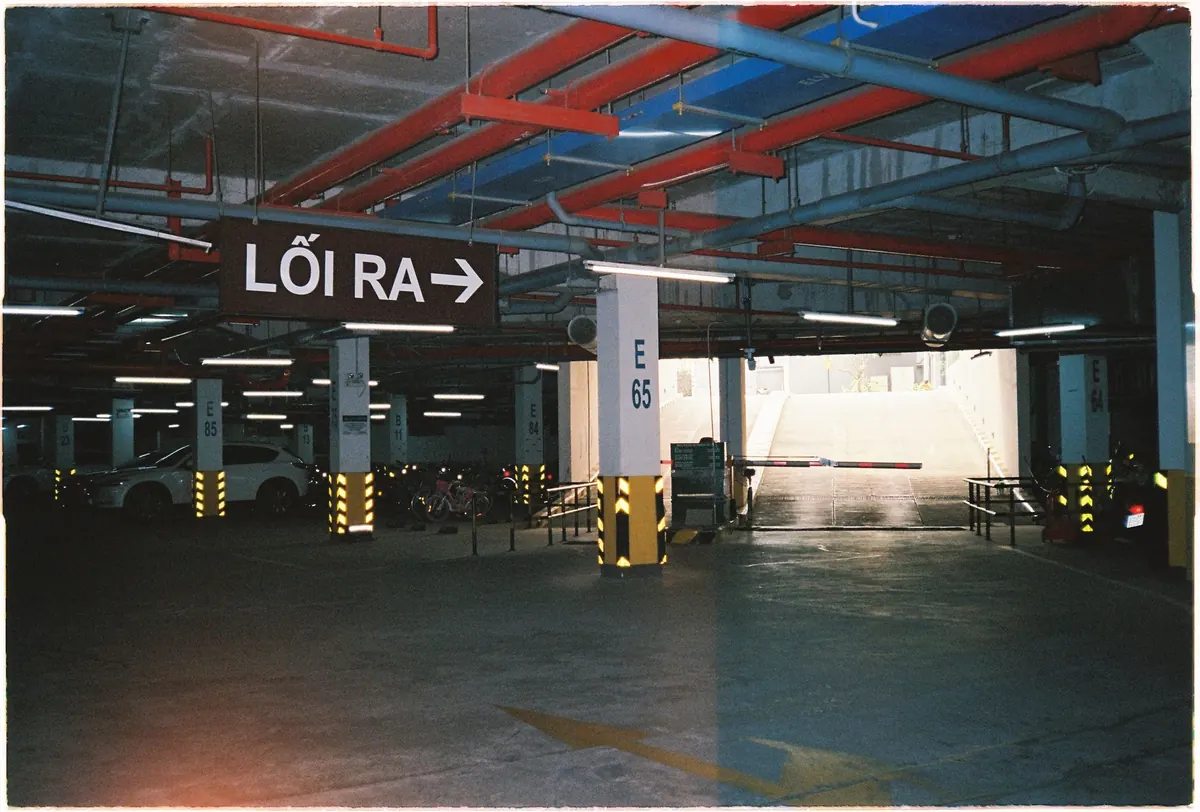
Visitor parking is one of those things nobody thinks about until a guest arrives, circles the block twice and parks somewhere they shouldn't. At Larch Court, a handful of simple rules keep the bays turning over and the neighbours on speaking terms. Here's how the zones work, what needs to be in the windscreen, and how to handle the awkward moments before they turn into formal complaints.
Where visitors can and cannot park
Visitor bays are the ones marked with a white "VISITOR" or "V" on the surface, usually grouped near the main entrance and the refuse store. They are shared by everyone, so they work on a first-come, first-served basis. No resident has a claim on a particular visitor bay, even the one directly outside their window.
Everything else is off limits unless a permit says otherwise:
- Resident bays — allocated by number in your lease or tenancy agreement.
- Accessible bays — for Blue Badge holders only, with the badge clearly displayed.
- Loading bays — short stays for deliveries and removals, not for a weekend visit.
- Turning circles, bin store forecourts and hatched areas — kept clear because a refuse lorry or a fire appliance may need the space.
If a guest cannot find a visitor bay, the safest options are the on-street spaces outside the development, where normal highway rules apply, or a paid car park nearby. Parking on the pavement or blocking a bin store rarely ends well for anyone.
Permits, scratch cards and how to get them
Most residents do not need a permit for their own allocated space — the bay number and the vehicle registration held on file do the work. Visitors are handled differently.
Short visits
For a couple of hours, a visitor can normally use a marked visitor bay without paperwork, provided they stay within the time limit shown on the sign at the end of the bay.
Longer stays and overnight guests
Anything longer usually needs a visitor permit, a scratch card or a temporary registration added to the system. These come from the managing agent or the residents' committee; the noticeboard by the main entrance gives the current contact and the cut-off time for same-day requests. Give as much notice as you reasonably can — a request logged on Friday afternoon for a Friday evening arrival is unlikely to be actioned.
Display the permit exactly as instructed: face up, on the dashboard, with the date and registration visible from outside. A permit that has slipped under a seat is, to anyone checking, no permit at all.
Time limits and how they are enforced
Time limits exist so that a visitor bay does not quietly become a second parking space for somebody's second car. Enforcement is usually carried out by a parking management company working for the development, and the terms are set out on the signs on site. A bay might be signed "Visitor — 3 hours, no return within 2 hours", for example.
- Read the sign every time. Limits and any "no return within" period can differ between bays.
- Do not overstay "just ten minutes". That is precisely when a ticket gets issued.
- Keep the permit or scratch card in the windscreen, not the glovebox.
- Tell your visitor what the limit is when they arrive, not when they are leaving.
Appeals go through the operator named on the notice, not through individual residents. Nobody at Larch Court can cancel a parking charge, so please do not promise a guest that you will "sort it out".
Etiquette that prevents most complaints
Good parking manners cost nothing and save a great deal of irritation. A few habits go a long way:
- Park between the lines, leaving enough room to open doors on both sides.
- Do not reserve a visitor bay with a cone, a wheelie bin or a note. Bays are shared.
- Move your own car out of a visitor bay when guests are not due.
- Give neighbours a heads-up if you are expecting several cars, or a van, for a party or a move.
- Keep the noise down when guests arrive late or leave early. Idling engines and car doors at midnight carry further than you think.
The disputes that come up most often
Almost every parking argument on a residential development falls into one of a few categories, and most can be defused with a note or a polite word.
"That's my space"
Allocated bays are easy to mix up, especially when visitors park in the wrong row. Photograph the bay marking and the vehicle, note the time, and pass it to the managing agent rather than confronting the driver.
"They have been there for three days"
A car sitting in a visitor bay for days is a common grievance. Report it. If it appears untaxed, abandoned or is blocking access, the local authority may be the right route.
"I got a ticket while visiting my mum"
Frustrating, but the appeal belongs with the operator named on the notice. Check the deadline and keep copies of any permit you had on display.
Accessible bay misuse
Do not challenge it yourself. Report it and let the operator or the local authority deal with it.
If there is a problem, deal with it early
Most parking trouble at Larch Court starts small: a car left slightly over a line, a permit that expired, a guest who parked in the wrong row. A friendly note under a windscreen wiper sorts out the majority of these. If that does not work, contact the managing agent with the date, time, location and a photograph, and let them handle it. Keep a record and stay civil. Blocking someone in as a form of protest tends to escalate quickly and can leave you in the wrong.
If a dispute becomes serious — repeated obstruction, damage, or a risk to safety — speak to the managing agent and check what your lease or tenancy agreement says. The rules on site and in your agreement take precedence over anything general, and this page is practical guidance rather than legal advice. For anything that could end up in front of a court, take proper advice before acting.
Photo: Kalipay / Pexels